
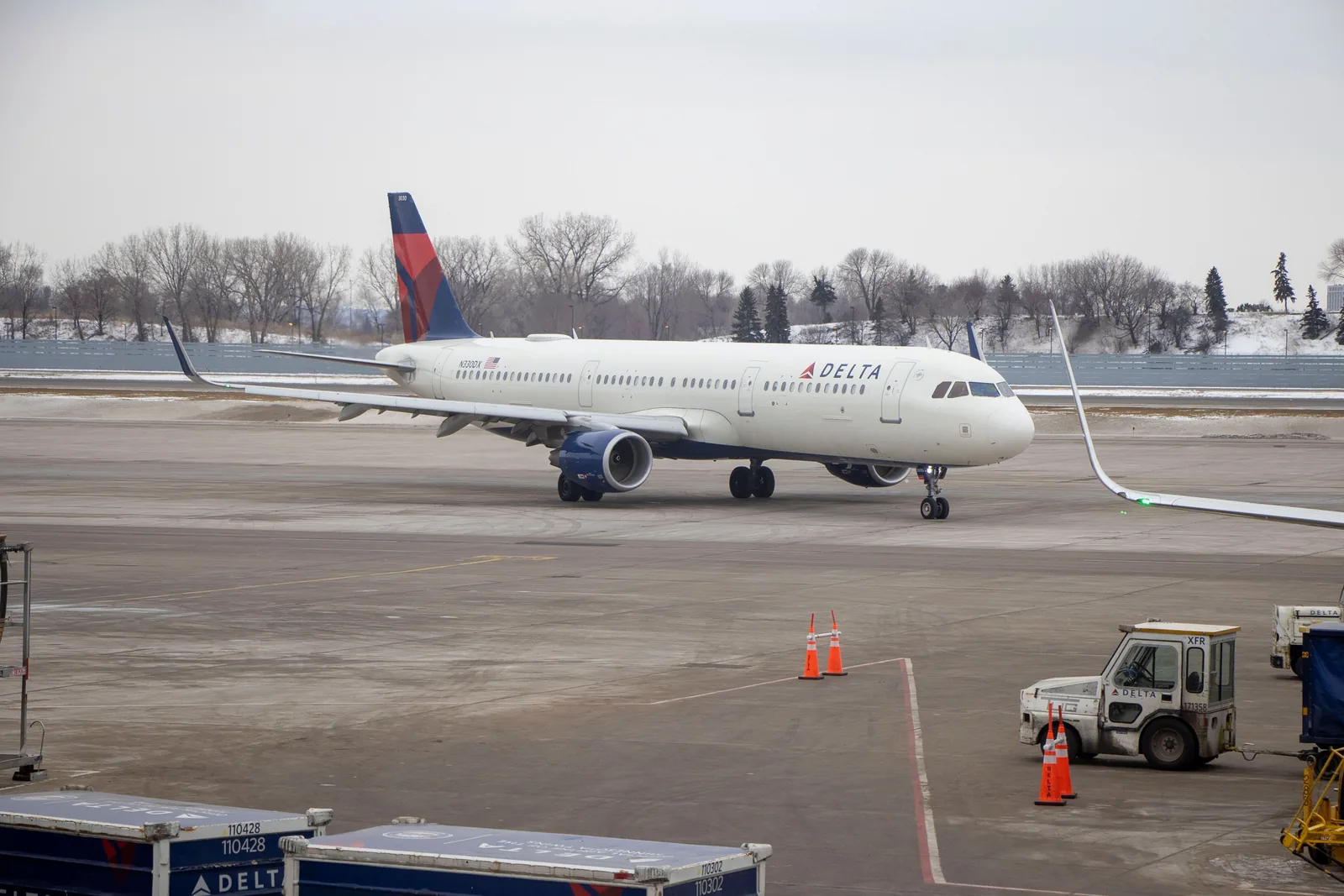
Searches for Delta Air Lines’ long-haul cuts spiked on September 16, the same day Simple Flying published a list of 21 long-haul airports the airline has stopped serving over the past decade. The changes that will actually reach travelers this winter are closer to home: five domestic routes that Delta is removing from its schedule between November and December 2026.
If you are booked on one of them, or on any flight an airline later drops, federal rules are more on your side than most passengers realize. Here is what is changing and what to do about it.
The five routes Delta is dropping
According to schedule changes reported by Aviation A2Z, these nonstops end this winter:
- Las Vegas (LAS) to San Diego (SAN): early November
- Las Vegas (LAS) to Orange County / John Wayne (SNA): early November
- New York LaGuardia (LGA) to Tulsa (TUL): early November
- New York JFK to Palm Springs (PSP): mid-December
- New York JFK to Milwaukee (MKE): mid-December
Reports differ by a day or two on the exact last flights, so treat your own reservation, not a news article, as the final word. The same report cites Cirium data showing Delta’s Las Vegas departures down about 7 percent on last winter, with weaker winter demand given as the reason. Limited Las Vegas service from San Diego and Orange County is due to return in January for the Consumer Electronics Show.
What happens if you are already booked
When a route disappears, a ticket on it does not simply become worthless. Airlines normally move affected passengers onto another itinerary, often a connection through a hub, and send a schedule change notice. That new itinerary is where the details matter, because under US Department of Transportation rules some changes give you the right to say no and get your money back.
When you are owed a refund
For flights to, from or within the United States, an airline must refund your fare, including taxes and any extra fees you paid, when your flight is canceled or “significantly delayed or changed” and you choose not to take the new itinerary or a voucher. A significant change includes any of these:
- A departure three or more hours earlier, or an arrival three or more hours later, than originally scheduled on a domestic itinerary. For international itineraries the threshold is six hours.
- A different departure or arrival airport.
- More connections than your original itinerary. A nonstop turned into a connecting trip counts.
- A downgrade to a lower class of service.
- For travelers with a disability, a different connecting airport, or a substitute aircraft that lacks an accessibility feature they need.
Two more details are worth knowing. The refund is automatic once it is owed: if you reject the change, or do not respond and the new flight leaves without you, the airline has to pay without you chasing it. And it has to be prompt: within seven business days for credit card purchases and within 20 calendar days for other forms of payment. The rule itself is 14 CFR 260.6.
Vouchers: read the offer before you click
Airlines may offer a voucher or travel credit instead of cash, but only as an explicit alternative. The offer has to state clearly that you are entitled to a full refund, and a voucher offered in place of a required refund must stay valid for at least five years. If you fly the airline often, a credit can be a fair trade. If you do not, take the money.
A checklist if your route is cut
- Open the reservation and read the new itinerary line by line: times, airports and the number of connections.
- Compare it with the significant-change list above before you accept anything.
- If the new routing works, check the details that do not always carry over, such as seat assignments.
- If it does not work, price the alternatives before you cancel. A different day, a nearby airport or another airline’s nonstop may cost less than you expect, and you want to know that before the refund lands.
- If you booked through an online travel agency, the refund request goes through the agency. The airline is required to tell the agent whether you are eligible.
- Remember what the rule does not cover. Hotel nights, rental cars and event tickets tied to your original dates are not part of the airline refund, which is another reason to book them with free cancellation. If you are counting on travel insurance, check whether your policy covers airline schedule changes.
How to spot the risk before you book
Airlines present changes like these as routine network reviews that match capacity to demand, and every major carrier makes them. For travelers, the lesson is that a ticket bought many months ahead on a thin, leisure-heavy route carries more schedule risk than one on a busy route between big cities. That is not a reason to avoid those flights, only a reason to check the booking now and then, and again a few weeks before you fly, rather than discovering a change at the airport.
Schedule changes are not only about routes. Our look at the American Airlines Flagship Suite explains how to make sure the aircraft you booked is the one that turns up at the gate. And when disruption comes on the day instead of months ahead, as it did when an air traffic control failure led to hundreds of cancellations in the UK, our report on Heathrow flight delays shows how quickly a normal travel day can unravel.