
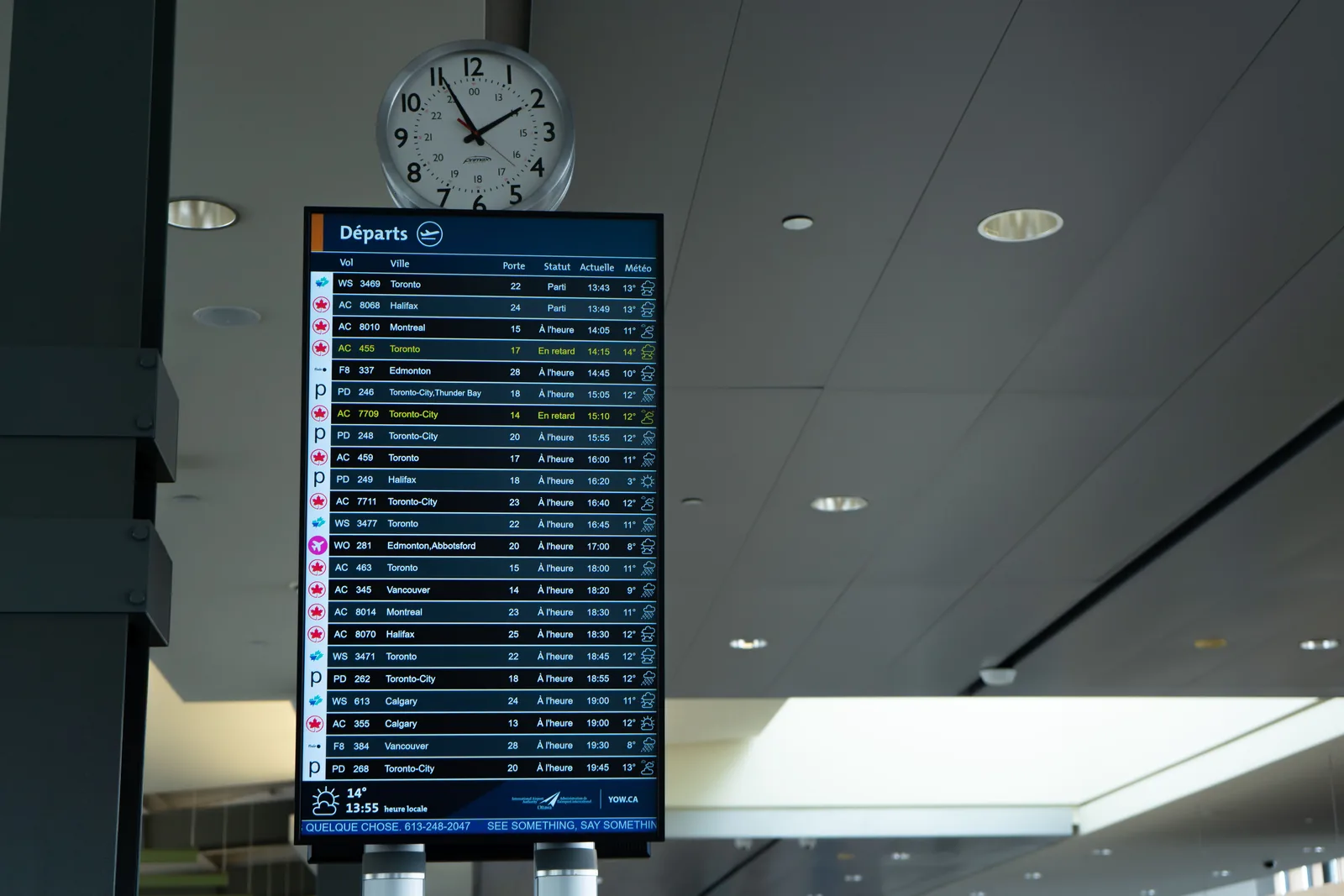
Clocks in most of the United States go back an hour at 2am on Sunday 1 November 2026, and for once there was a real chance they would not. The House passed a bill in July to end the twice-yearly change for good. The Senate has not acted on it, so the change is happening — and for anyone with a flight, a train or a transatlantic meeting in the last week of October, the interesting part is not the extra hour of sleep.
What is actually happening on 1 November
At 2am local time on Sunday 1 November, clocks in the observing parts of the United States turn back to 1am. Sunrise and sunset both shift an hour earlier, which is why the evenings collapse so abruptly in the first week of November.
Not everywhere changes. Hawaii and most of Arizona stay on standard time year-round — the exception within Arizona is the Navajo Nation, which does observe daylight saving time, so a drive across the northeast of the state in summer can cross the time boundary twice. American Samoa, Guam, the Northern Mariana Islands, Puerto Rico and the US Virgin Islands do not change their clocks either.
The bill that nearly stopped it
The Sunshine Protection Act, H.R. 139, passed the House of Representatives on 14 July 2026 by 308 votes to 117 — a comfortable bipartisan margin, recorded as Roll Call 238. It would make daylight saving time permanent, ending the twice-yearly change rather than the summer hour.
It went to the Senate the following day, 15 July, where it was read twice and referred to the Committee on Commerce, Science and Transportation. It has not moved since, and an earlier version of the same idea stalled in the Senate several years ago. For the clocks to stay put this autumn, the bill would have had to clear the Senate and be signed before 1 November. It has not, so they will not.
The opposition is more interesting than a simple yes-or-no on clock changing, because it splits in two directions. Sleep researchers and medical bodies largely want the change abolished as well — but in favour of permanent standard time, which they argue fits human circadian rhythms better than permanent daylight saving would.
The other objection is commercial, and it comes from an industry most travellers would not have guessed. Five ski resort trade groups and two resort companies, representing 115 ski areas across ten states, wrote to 19 senators urging them to reject the bill. Their argument is about mornings: permanent daylight saving time would take an hour of light off the start of a winter day, leaving crews preparing slopes in the dark and pushing back opening times. Compressing a resort day to roughly 10am to 4pm, the letter argues, would be equivalent to cutting two weeks from the season.
Whether or not that is decisive, it is a useful reminder that a clock change is not a neutral administrative act. If you are planning around the snow this year, our winter 2026-2027 snow forecast covers the season as it currently stands.
The week when America and Europe are out of step
This is the part that catches people out, and it has nothing to do with the bill. The United Kingdom and the European Union end summer time on the last Sunday in October — 25 October in 2026, when clocks go back at 2am. The United States does not change until 1 November.
For that week in between, the usual gap between North America and Europe narrows by an hour. New York, still on daylight time, sits four hours behind London rather than the familiar five. The same one-hour compression applies across the rest of the pairings: the whole of the eastern United States is an hour closer to Europe than it normally is, for seven days.
Airlines and rail operators handle this correctly, because schedules are published in local time at each end and the systems know the rules. The failures are human. A recurring calendar invite created in one time zone can drift by an hour when only one side has changed. A transatlantic call that has run at the same time all year will not. And a connection that looked comfortable can be tighter or looser than the printed times suggest if you work it out in your head using the usual offset.
The advice is unglamorous and it works: during that week, trust the local departure and arrival times printed on the ticket, and do not do the arithmetic yourself. If you are booking anything around an event in London in late October, check the local start time against your flight rather than against your assumptions.
The mismatch is wider in spring, incidentally. The US moves forward on the second Sunday in March and Europe on the last Sunday, leaving roughly three weeks of shifted offsets rather than one. And in the southern hemisphere the clocks are moving the other way entirely: Australia and New Zealand start their daylight saving in October, while the north is ending it.

What the change does to a travel day
Flights in the air at 2am on 1 November do not land an hour early; the schedule simply absorbs it, and an overnight flight may show a shorter elapsed time on paper than the hours you actually spent on board. Overnight trains and long-distance buses handle it in the other direction, sometimes sitting at a station for an hour to stay on schedule. If you have a red-eye that night, check the arrival time rather than assuming.
The more practical effect is daylight. From 1 November, sunset in the northern United States arrives in the late afternoon, which reshapes what is realistic in a day: a national park hike that worked in October now finishes in the dark, and city sightseeing loses its evening hour. Plan outdoor activity for the morning in November in a way you would not have needed to in September.
One thing not to worry about: your phone. Devices update automatically from the network, and have handled US and European rules correctly for years. The risk sits with anything you set manually — a hotel alarm clock, a hire car dashboard, a watch, an oven timer in a rental.
Will this be the last time?
Possibly, but the same has been said before. The Senate passed a similar bill unanimously in 2022 and the House never took it up; this year the chambers have swapped roles. The bill remains live in this Congress, so a Senate vote later would affect future years rather than this November.
Until something is signed, the rule is the one that has held for decades: forward on the second Sunday in March, back on the first Sunday in November. For now, that means 1 November — and the week before it, when half the Atlantic has already changed and the other half has not, is the one worth putting in your calendar. If your winter plans depend on a flight that may not survive the season, it is also worth knowing what you are owed when an airline cuts a route.