
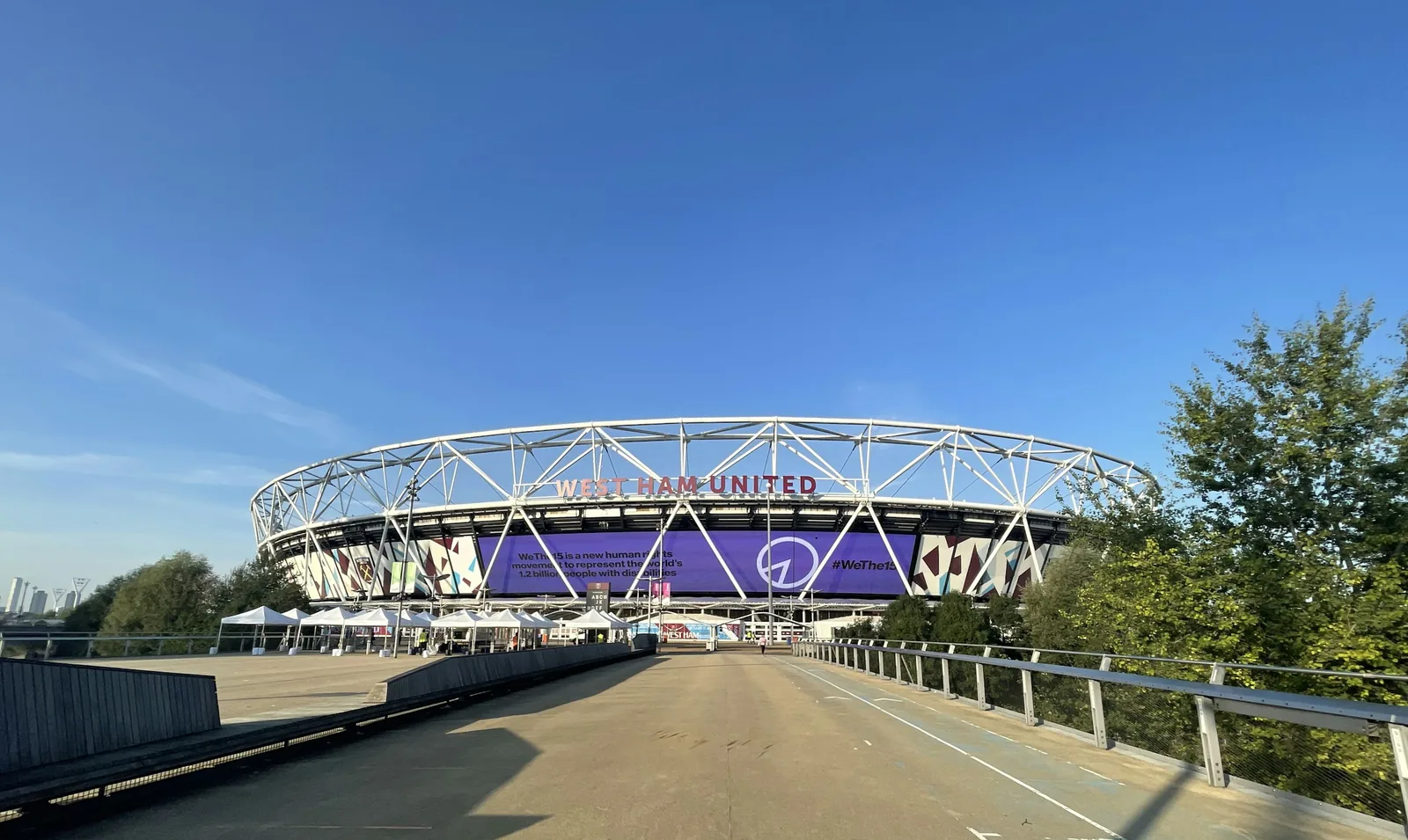
West Ham beat Wrexham 6-0 at the London Stadium on Friday night, with Jarrod Bowen, Joël Piroe, Konstantinos Mavropanos, Valentín Castellanos, Mohamadou Kanté and Manor Solomon all scoring. It was Wrexham’s heaviest defeat since Ryan Reynolds and Rob McElhenney bought the club in 2021 — worse than the 5-0 of September 2023 — and it came in a season with one win in their first seven Championship matches, after three straight promotions carried them into the second tier for the first time.
The scoreline is not why the match trended in the United States. Wrexham’s rise has given an English second-division club a genuinely international following, and a lot of those people are now planning a first trip to an English ground. Friday’s was an away day at one of the easiest big stadiums in Europe to reach, and one of the easiest to get wrong.
What the London Stadium actually is
It sits in the Queen Elizabeth Olympic Park in Stratford, in the Lower Lea Valley, about six miles east of central London. It opened on 5 May 2012 as the athletics venue for that summer’s Olympics and Paralympics, and hosted both ceremonies. West Ham signed a 99-year lease on 22 March 2013 and moved in as anchor tenants for the 2016 season.
Capacity is 62,500 for football, 68,013 seats in total, and up to 80,000 for concerts. The nine-lane Mondo running track from 2012 is still underneath all of it, which matters more than it sounds — see below.
One park, three stations
- Stratford is the main one, in fare zone 2/3. It is the seventh busiest railway station in Britain and the busiest Underground station outside Zone 1, and it is 6.5 km from Liverpool Street. Almost everyone uses it.
- Stratford International is about 400 yards north, on the same DLR line. Despite the name it will not be an international terminal for your purposes — if your app routes you here instead, you have not made a mistake.
- Pudding Mill Lane is a single small DLR station on the other side of the park. Far less capacity, far fewer people, and the one regulars use to get out afterwards.
Which service to take, and from where
Seven different services call at Stratford, which is the reason this ground is so forgiving to reach:
- Central line — the direct run from Liverpool Street, Bank, Holborn and Oxford Circus.
- Jubilee line — Stratford is its eastern terminus, so it is a straight ride from London Bridge, Waterloo, Westminster and Bond Street.
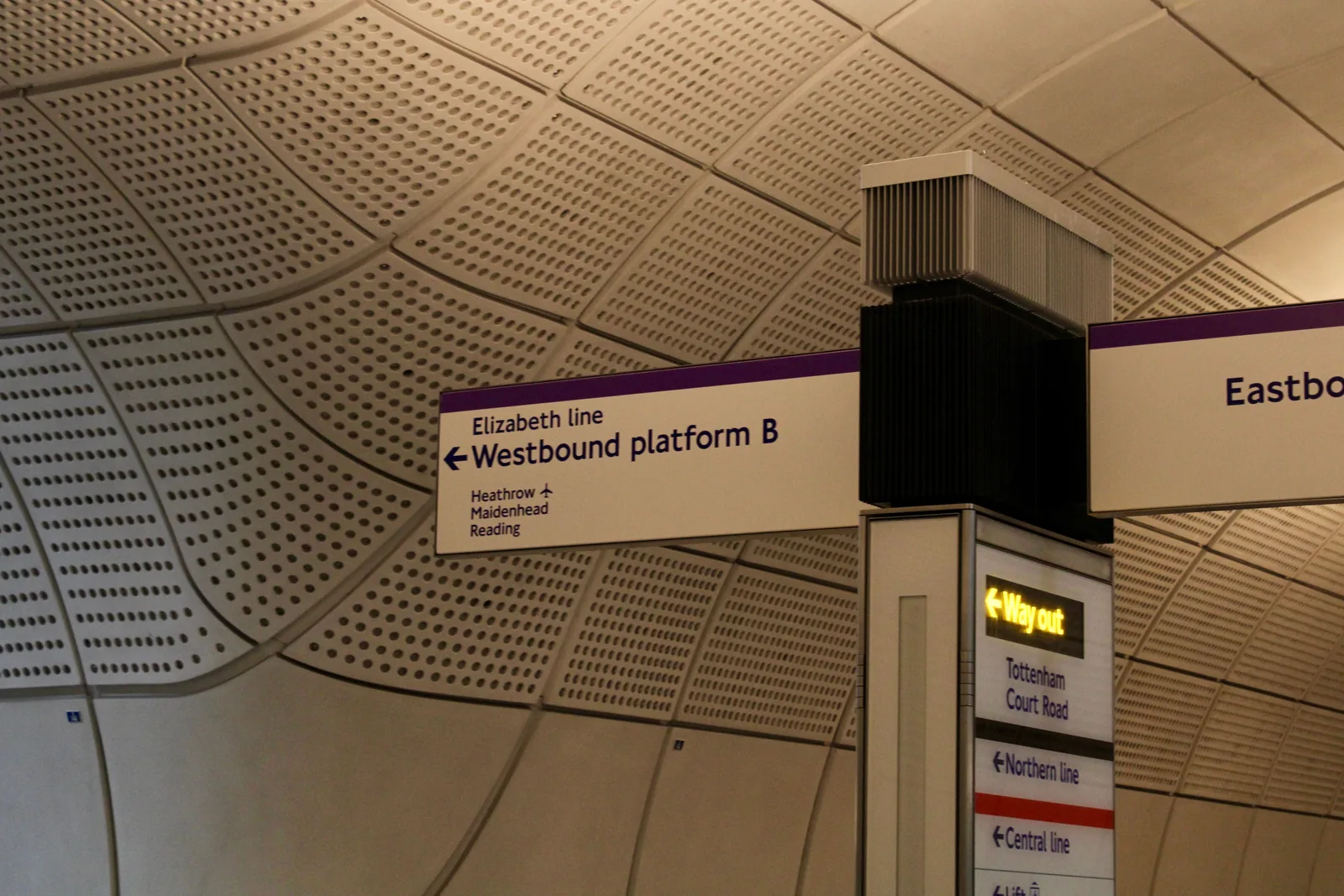
- Elizabeth line — Stratford is on the Paddington to Shenfield stopping services. This is the fast one, and if you flew into Heathrow it is your line in both directions.
- DLR — the way in from Canary Wharf and the Docklands.
- London Overground, Mildmay line — Stratford is the terminus; the route in from north London.
- Greater Anglia — medium- and long-distance services from the East of England.
- c2c — limited off-peak services on the Tilbury and Southend line.
Pay with contactless or Oyster and let the daily cap handle it; there is no advantage to buying paper tickets for a zone 2/3 journey.
The name trap
Stratford and Stratford International are 400 yards apart and either is fine. Stratford-upon-Avon is a different town in Warwickshire, more than a hundred miles away, and visitors book trains to it every season. Check the destination before you pay, not after.
If that sounds familiar, it is the same class of mistake that catches people in Manchester, where two stations share a stadium’s name — our Old Trafford matchday guide walks through that one.
The walk nobody budgets for
You do not arrive at a turnstile. You arrive at a park. From the Stratford ticket hall the route runs through or alongside Westfield Stratford City and then out onto the raised walkways and bridges that cross into the Olympic Park, with the stadium visible for most of it.
Allow a good fifteen minutes on a quiet day, and considerably more when sixty thousand people are doing it at once. It is flat, well-lit and easy — it is just longer than the map implies, and there is very little shelter on the approaches if the weather turns.
Why your seat may feel further from the pitch than you expected
Because the building was designed for athletics and the track never left. The 2013-2016 conversion added retractable seating in the lower tier that moves in for football and back out for everything else, which is why the stadium can also host a full nine-lane meeting without being rebuilt.
The retractable tier closes the gap but does not erase it, and it is the single most common complaint from first-time visitors used to purpose-built English grounds. If sightlines matter to you, pay for the lower tier and get as near the halfway line as your budget allows. If the occasion matters more than the angle, the upper tier at one end is cheap and very loud.
Getting out afterwards
Sixty-odd thousand people leave a park served by three stations. Stratford absorbs it better than almost any ground in the country because of those seven services, but the first ten minutes are still the worst ten minutes. The two reliable tactics are to walk across the park to Pudding Mill Lane, or to simply not leave for twenty minutes — the park is a pleasant place to stand around in, which is not true of most stadium exits.
If you are there in daylight with time to spare, the park also has a separate six-lane community athletics track north of the Greenway footpath, open to the public since October 2017, and enough green space to make an afternoon of it before kick-off.
Making a weekend of it
Stratford is a workable base in its own right — it is on the Elizabeth line, which puts Heathrow and the West End in the same swipe. For the other big east London night out, our guide to a night at The O2 covers the arena on the other side of the river and how to reach it without a car.
And if the Wrexham result put you off, remember what the away end was actually there for. Three promotions in three years is not a thing English football does often, and a 6-0 in September is not the story of that season.