Real Betis host Real Madrid on Friday, September 4 — LaLiga’s fourth matchday, and Madrid’s last league fixture before the Champions League begins. The detail that changes how you plan this one: Betis aren’t playing at their own stadium. The match is at Estadio de La Cartuja, across the river from the Benito Villamarín, and getting there works differently than a normal Betis home game.
Why the Match Isn’t at the Villamarín
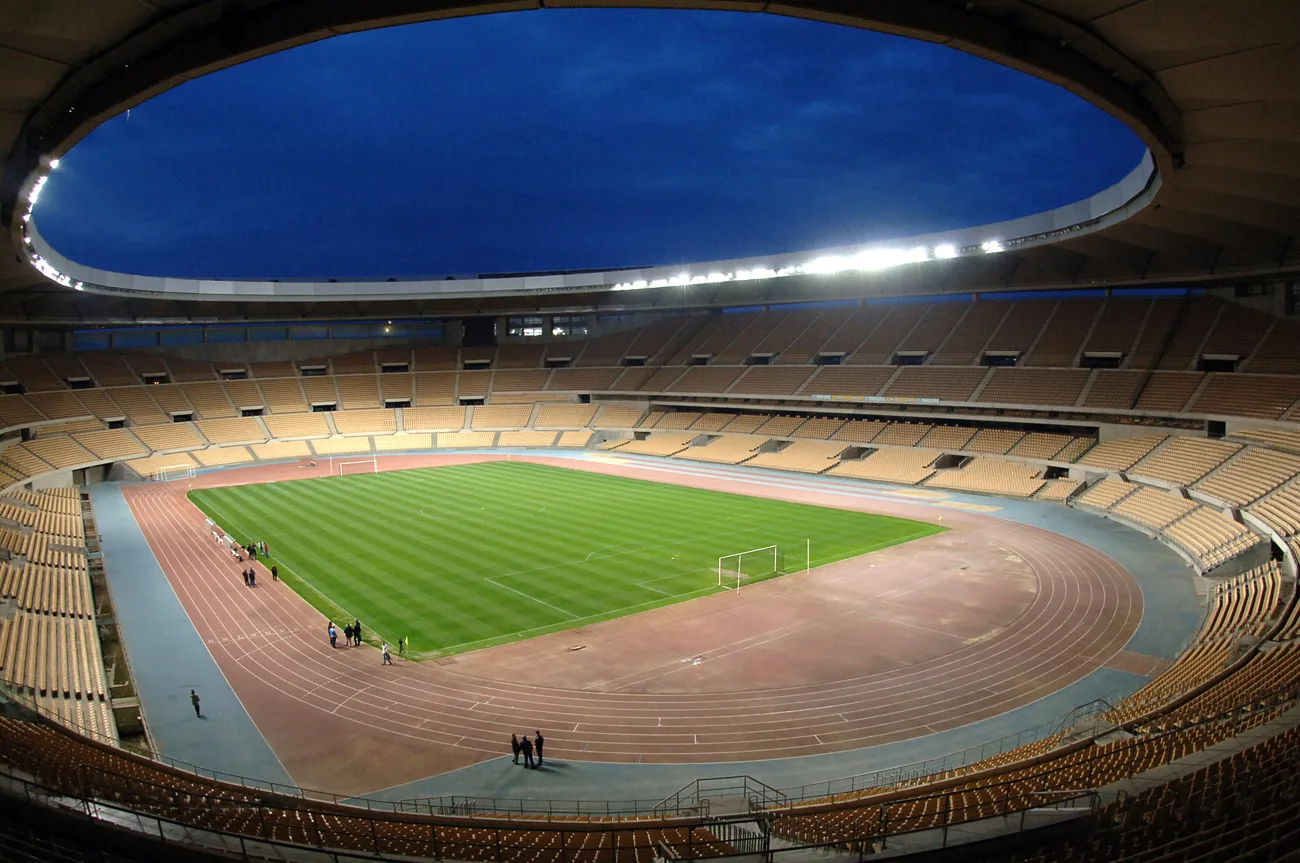
The Benito Villamarín is undergoing renovation work, and Betis have shifted a number of fixtures this season to La Cartuja — Seville’s other major stadium, built for the 1999 World Athletics Championships and used since for Copa del Rey finals, a UEFA Cup final and international matches. It’s a larger venue than the Villamarín, which also means a bigger crowd converging on a stadium that wasn’t built with a weekly matchday routine in mind.
Getting to Estadio de La Cartuja
La Cartuja sits on its own island, Isla de la Cartuja, north of central Seville across the Guadalquivir — and unlike the Villamarín, it has no metro or tram stop of its own. On matchdays, TUSSAM (Seville’s city bus operator) typically runs extra shuttle services from central points to the stadium; check TUSSAM’s site in the days before the match for the specific routes activated for this game rather than assuming a regular city bus goes there. Walking is also realistic if you’re staying near the center: it’s roughly a 25-30 minute walk from Plaza de Armas across the Puente del Alamillo. If you drive, expect the island’s parking areas to fill fast and leave well before kickoff — this is not a stadium with a metro line to bail you out if the roads back up.
Before or After the Match: Seville Itself
A Friday-night kickoff leaves the whole day free in the city center. The Real Alcázar and Seville Cathedral, with its Giralda tower, sit within walking distance of each other in the old town and easily fill a morning. Triana, the neighborhood across the river known for its ceramics and tapas bars, sits roughly between the center and La Cartuja, making it a natural stop on the way to the stadium rather than a separate trip.
What to Expect From September in Seville
Seville in early September is still firmly summer, with afternoon temperatures regularly climbing into the mid-30s Celsius (mid-90s Fahrenheit). A 9 p.m. kickoff means the worst of the heat has passed by the time the match starts, but the walk to the stadium and the wait outside the gates will still be warm — bring water and don’t plan on more than a light layer.
The pattern here is the same one behind planning a trip around a LaLiga weekend in Barcelona or getting to the Presidents Cup at Medinah: when a big event lands somewhere without transit built for it, working out the route in before you plan anything else saves the rest of the day.
Photo: Валерий Дед, CC BY 3.0, via Wikimedia Commons.